Edouard Manet: Young Flautist, or The Fifer, 1866 (Photo credit: Wikipedia)
The fife is a type of flute that is fairly similar to the piccolo. It is a transverse flute that emits a high pitched sound that is louder than the piccolo because of its design. It has a narrower bore that causes the higher pitch. This flute was most often used in marching bands and the military, possibly because of its loud and distinguishing sound. It was not often used in musical orchestras in the past, though it was used in some folk music, and it does not appear to be one of the more popular flutes in general, though it is still around for people who want to take up the fife as their musical instrument of choice.
The fife is an older type of flute that appeared to have first been developed in Switzerland, during the 1300s. When it was first created, it was used in the traditional folk music of the time and was a common instrument used to accompany dancing. Its use was not limited to the upper class; it appears that all social classes were able to enjoy the music as well as play the instrument. In modern music, the fife is still used in different forms of folk music, as well as in the blues music, Celtic music and folk rock.
Like most flutes, the fife is fairly simple in design. The fife is made out of a narrow tube that has six holes in it that are covered by the musician's fingers to play different notes. There are some fifes that have more than six holes, but these are usually added for chromatics. Unlike some of the other flutes made today, the fife is often made out of wood, such as rosewood and mopane, though it is occasionally made out of plastic or metal. The fife is made in a particular key; either in B flat, C or D. Fifes made in the key of C and D are more common than the ones made in B flat.
Fife-wooden, civil war era (Photo credit: Wikipedia)
The fife is a small instrument that is very easy to carry just about anywhere. Fifes made out of different material and are made in different keys have unique sounds, and can sometimes make it difficult for someone to pick out the fife of their choice when they decide it is the instrument they would like to adopt. Most people looking for the right fife will focus on the sound that each type makes and will pick the one that has the sound that is most attractive to them.
This instrument is also fairly inexpensive to purchase and the music is relatively easy to acquire. When first learning how to play an instrument, this is probably one of the best ones to start with. It takes some time and practice, but it allows a new musician to learn how to read and follow sheet music, as well as learn how to control their breathing so that they can create the sound that they want. The fife might not be the first instrument that comes to mind when a person is thinking about what they would like to play, but it is certainly a good choice for someone new to music.
Victor Epand is an expert consultant for used CDs, autographed CDs, and used musical instruments.
Article Directory: EzineArticles
Hip hop means many different things. It was first used to refer to the culture and way of life of urban city New York City. But, since then, the term has taken on a life of its own. The most popular meaning of hip hop is now music. Hip hop or rap as it is also called has several origins. In fact, there is no one origin that can be called the only one. There are several histories about how hip hop got started.
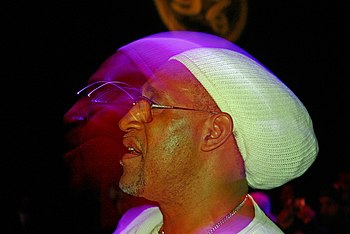
DJ Kool Herc is credited as being highly influential in the pioneering stage of hip hop music.
(Photo credit: Wikipedia)
First of all, the influences that helped to inspire hip hop are thought to be traced back to African culture, but it isn’t until the multicultural mix of New York City that the music began to flow. But, even if we do not have a clear picture as to when hip hop was started, we do know that there are some major players in its history.
For example, one type of hip hop called dub is traditionally Jamaican style. Other forms such as Reggae are evident from the 1960’s. Through development with artists such as U-Roy, Dr. Alimontado and Dillinger that most began to change to incorporate a more obvious baseline and percussion element. Blues music also came to light inspiring another turn in the culture.
When we talk about the term of hip hop, we are often brought back to Kool Herc, a DJ when he began working with Afrika Bambaataa. There are many more people that fold into the story of how hop hip hop got started. If you want to take it back to decades ago with the combination of African music, reggae and blues you will find a line of wonderful artists. Or, with the urban culture of inner city New York, there is another line of artists that have made their mark. One thing is clear, though; hip hop continues to make history for years to come.
To find more information about how hip hop got started, you can find a wide range of information available to you right on the web. And, with so many people needing this information and wanting to know the roots of this music genre, it is safe to say that what you need to know is available to you here, on the web.
The role of the military drummer is a fascinating chapter from the hidden history of drums.
Hidden, because most people are unaware of the vital role played by the military drummer in communicating strategy and keeping the machinery of battle oiled.
In the 17th century, in preparation for battle, before the head on clash between rival armies, considerable time was spent manoeuvering men into position.
The drums were used to convey orders - each 'beat' having a specific meaning instantly recognisable to the soldiers.
When the drummer's 'Call' was heard, the men dropped what they were doing and immediately regrouped by their lieutenant or platoon commander to await further signals.
The Captain's order to beat the 'Troop' was a signal to shoulder muskets, advance pikes and close rank and file.
The 'March' was a signal to advance, faster or slower according to the beat of the drum, to the point of rendezvous.
The 'Preparative' signaled the men to advance in rank and file to within skirmishing distance and be ready to engage battle.
At this point the company drummers would run to where the Colonel stood (or sat on horseback) beside his own side-drummer and the standard bearer.
Drummer of bombardier regiment, 1757-1758 (Photo credit: Wikipedia)
Engaging The Enemy
On the Colonel's order the drummers would beat the 'Battaile' or 'Charge'.
This was described by Colonel William Barriffe to mean 'pressing forward in order of battle without lagging behind, rather boldly stepping forward in place of him that falls dead or wounded before thee...'
In the thick of battle, with the sound of cannon and musket, the neighing of horses, the screams of the dying and wounded, the Colonel's voice would not be heard and the beat of the drum continued to play a vital role in communicating orders to the troops.
From his vantage point the Colonel would command his drum-major to instigate various manoeuvers. If it was required to withdraw in an orderly fashion - for relief, or to gain a vantage point, or to lure the enemy into an ambush - the 'Retreat' would sound. The soldier, fighting for his life, was well prepared - the meaning of the different beats had been literally 'drummed' into him time and time again in training.
At the onset of battle, the roar of the assembled drummers would surely instil courage in the hearts of the men (and fear in the hearts of the enemy). Possibly, in the heat of battle, the beat of the drum, detached and ethereal, took on a spiritual quality, helping the combatants to distance themselves from the horror and suffering all around.
The drummer clearly carried a huge responsibility in the orderly conduct of war. In recognition of this it was considered highly dishonourable to knowingly strike or wound a drummer in battle.
Charles Armstrong
Hugh Barty-King 'The Drum - A Royal Tournament Tribute to the Military Drum' 1988
ISBN 0 9513588 0 4
One of the most interesting chapters in the history of drums is largely forgotten today - the various duties performed by military drummers in the past.
In times of peace, it was the drummer's responsibility to beat the 'tattoo' at sunset in the town streets - a signal to publicans to stop serving ale to soldiers and bid them drink up so they could get back to camp in time for curfew.
Battle of Naseby, by an unknown artist (Photo credit: Wikipedia)
David Gilmore, Pink FloydDrummers also played a crucial role in introducing new blood into the army - in the town square, the drummer would demonstrate his prowess on the side drum - literally 'drumming up' new recruits. Many a young lad lived to rue the day he allowed himself to be seduced by the glamour of the drum into believing the recruiting officer's promises...
In times of war, in the thick of battle, drummers would relay the Colonel's orders to the troops - each 'beat' having a specific meaning which had been endlessly 'drummed into' the soldiers in training. When the chaos and noise around them rendered the Colonel's shouts ineffective, the beat of the massed drums indicated when they should regroup, advance, make ready, engage battle, retreat.
One of the more interesting functions of the drummer was to 'parley' with the other side - he would be sent as a go-between across enemy lines - to negotiate terms, arrange and pay ransoms, offer or accept terms of surrender, to deliver and bring back any hostages or prisoners who were to be exchanged.
Samuel ButlerEquipped with a small drum for lightness, and with written confirmation of his message attached to his hat, the drummer would approach the enemy camp and stop a musket shot's distance from the gates.
The sound of the 'parley' beaten on his drum was a signal of readiness to trade terms, and a party would come out to lead him, blind-fold, inside the camp to the General's pavilion.
His hidden adgenda to find out as much as he could about enemy numbers and the layout and disposition and any potential weakness of the camp was no secret to the adversaries, and anyone caught speaking to him out of line could reckon with the severest punishment. According to Robert Ward's Articles of War, Number VIII, 'Speaking With The Enemies' Messengers': 'None shall speak with a Drum or Trumpet or any other sent by the Enemy without order upon pain of punishment at discretion.'
Likewise, he had to be on his mettle not to divulge any information - the enemy would often ply him with drinks in the hope of loosening his tongue.
Parleying was obviously a delicate and dangerous undertaking and required skills of the drummer above and beyond musicality and mastery of the technique required to beat complex rhythms on the side drum. Discretion was required, tact, diplomacy, negotiation, sobriety, the ability to read and write, knowledge of foreign languages - skills not commonly found among rank and file soldiers in those days.
Parleying was manifestly a dangerous undertaking. The drummer who entered the enemy camp displaying any lack of confidence, or faltering in his delivery, or indadvertently insulting the enemy, could rightly fear for his safety.
The other extreme was also best avoided.
On Friday August 15 1645, at the height of the English Civil War, the royalist Governor of Sherborne Castle dispatched a drummer at 2 o'clock in the morning with the message he was willing to surrender on honourable terms.
Sir Thomas Fairfax, Captain General of all the Parliamentary Forces In England, could scarcely conceal his temper.
He dispatched his own drummer to offer no terms but quarter, and that should not be expected unless he surrender speedily...The over-confident manner of Fairfax's drummer in delivering this message so incensed the Governor that he almost hanged the fellow on the spot.
The drummer, however, lived to tell another tale. The episode ended badly for Sherborne Castle.
Charles Armstrong
In the words of Anne Finch, after the end of that terrible conflict:
"Trail all your pikes, dispirit every drum,
March in long procession from afar
Ye silent, ye dejected men of war!
Be still the hautboys, let the flute be dumb!"
With acknowledgement to: Hugh Barty-King
'The Drum - A Royal Tournament Tribute to the Military Drum' 1988
Dancing is something that many people enjoy not only as a recreational pursuit but also as an integral part of their fitness routine. Dance is a great way to keep your body in shape without feeling as though you are somehow being punished for enjoying that extra scoop of ice cream on your cone.
At the same time, dance is also something that many people simply find enjoyable. As with most things in life though, there are often right and wrong ways in which you can make most dance moves and some of them might not be as good for you as they think. For this reason you really do need to seek qualified instructions. Below you will find four different methods in which you can get the instruction you need to dance your heart out.
Private Dance Instruction
If you are in a financial situation that allows for this then this is the ideal option. With private lessons you will have one on one instruction and the direct attention of the instructor. Private lessons provide the absolute most bang for your buck and will provide the most immediate pay off for your efforts as you will move at your own pace and will not have to wait on other students to catch up or feel left behind by students who have a higher beginning level of skill.
Private lessons also provide the opportunity to address specific needs and problem areas when it comes to your dancing. This means you will learn the right way from the beginning, provided you went with a reputable instructor who is very knowledgeable. The benefits of private instruction are really amazing when compared to some of the other available methods of learning to dance.
Formal Group Dance Lessons
You can sign up for group dance lessons at almost any age. There are very few requirements and classes are offered for many different experience levels as well. If you are an utter novice there will be classes that will teach you the basics and get you started on your way. There are also classes that are designed to teach advanced students more difficult footwork and techniques. Some people thrive in these sorts of classes because there is some degree of competitiveness involved. Friendly competition is often a great motivator for success. Others however, feel somewhat left behind or unchallenged in these sorts of classes and would do better with a different form of instruction.
Informal Group Dance Instruction
This is the type of instruction you will often find prior to dances in local dance halls and nightclubs. The atmosphere is very informal and the goal is to give a basic primer. This sort of instruction will prepare to you to execute a few very basic moves and very little else. This is very popular in areas where line dancing is common to teach patrons how the moves involved in specific dances. This type of instruction is not recommended for those who want a serious amount of instruction when it comes to dance but for those who have a fleeting interest and only want to learn a couple of dances for fun on a night out, this is ideal.
Video Dance Instruction
Believe it or not, many would be dancers are petrified at the very thought of someone watching as they attempt to learn the moves required for the dances they wish to execute. We live in a world of perfectionists however and if you happen to be a perfectionist, then video dance lessons may be the perfect bet for your needs and wishes. You will find a wide selection of these video lessons online if you are willing to look. You will even find many that are designed to teach dance for the sole purpose of fitness while others teach dance for the sole purpose of fun.
The direction you take when it comes to learning to dance is entirely up to you. The many different types of classes offer appeal to the many different types of people in the world today. If one type of class worked for everyone wishing to take classes then there would be no need for the different types of dance classes. The truth is that not everyone learns best in the same situation. Select the learning method that you feel will be best for you and start learning to dance today.
Lyrics Born at the 2006 Coachella Valley Music and Arts Festival
(Photo credit: Wikipedia)
Any songwriter knows that a song will not make it without having well-written music and perfectly crafted lyrics. But the interaction between music and lyrics in a song poses two questions. The first is which is more important and the second is which should be written first. Nevertheless, the second question is not truly an issue; as it is simply a matter of personal preference and habit. The question that really needs answering is in fact the first: “Which is more important?!”
To answer this question, we have to examine the audience perception of songs. Songs are written for people to hear them; therefore the way they identify with songs is most relevant and crucial to the songwriting process. A good songwriter should examine his/her audience beforehand and, consequently, shape the song to be as easily conceived as possible by its intended audience.
As I belong to western music by education (classical music) and to oriental music by birth (being from Egypt), I have examined -as deeply as I could- the perception of songs by both Arabic listeners and European listeners. My conclusion is that those two different cultures produced very differently biased people.
The Arabic culture and legacy is based heavily on poetry while music remained trivial. Consequently, for Arabic listeners the lyrics come first and music is reduced to a melodic vehicle for the lyrics with the least amount of arrangement possible. Lyrics come first for Arabic listeners!
On the other hand, Europe’s music heritage is enormous with a lot of genius composers who will always be remembered. At the same time, Europe's great poets used the type of language that today needs a lot of simplification to understand. The music reaches the European listener before the lyrics!
So, does this mean that one can write "bad" lyrics for European listeners and get away with it?! Of course NOT!! They eventually catch up. Also, Arabic listeners will not listen to a song with bad music. The idea is that if your audiences care less for lyrics, then they wouldn’t “appreciate” a complex lyric. In fact, they wouldn’t understand it and will label it as “bad”. It has to be “good” but not “complex”. It’s all about complexity. Arabic listeners will settle down with a nice melody that fits the lyrics well. It has to be nice, but it CAN’T be complex!! My mother thinks that Dvorak’s “New World Symphony” is “louder” than music should be. I think she meant to say: “too complicated for music”. Conversely, European listeners will not settle for a nice melody, you have to have strong chord progressions, a powerful base line and a strong drum line.
So, I write more complicated lyrics for Arabic listeners and more complicated music for European listeners. Study YOUR OWN audiences and see what they like and to which side they are biased, so you know how to adjust your song’s complexity. But beware; sometimes “less complicated” means “more difficult to write”…Wish you simple songwriting!!
The ending scene of Ocean's Eleven is one that is quite well-known indeed, and Claude Debussy's "Clair de Lune" (or, at least, one of the orchestrations of "Clair de Lune" - but we'll get there soon enough) is a piece that is instantly recognizable - not just from this movie, of course, but in just about anything where a feeling of languid reverie is desired. Not too shabby for a man who was never really seen as more than a bizarre little composer by Those That Know More About Music Than You in his time.
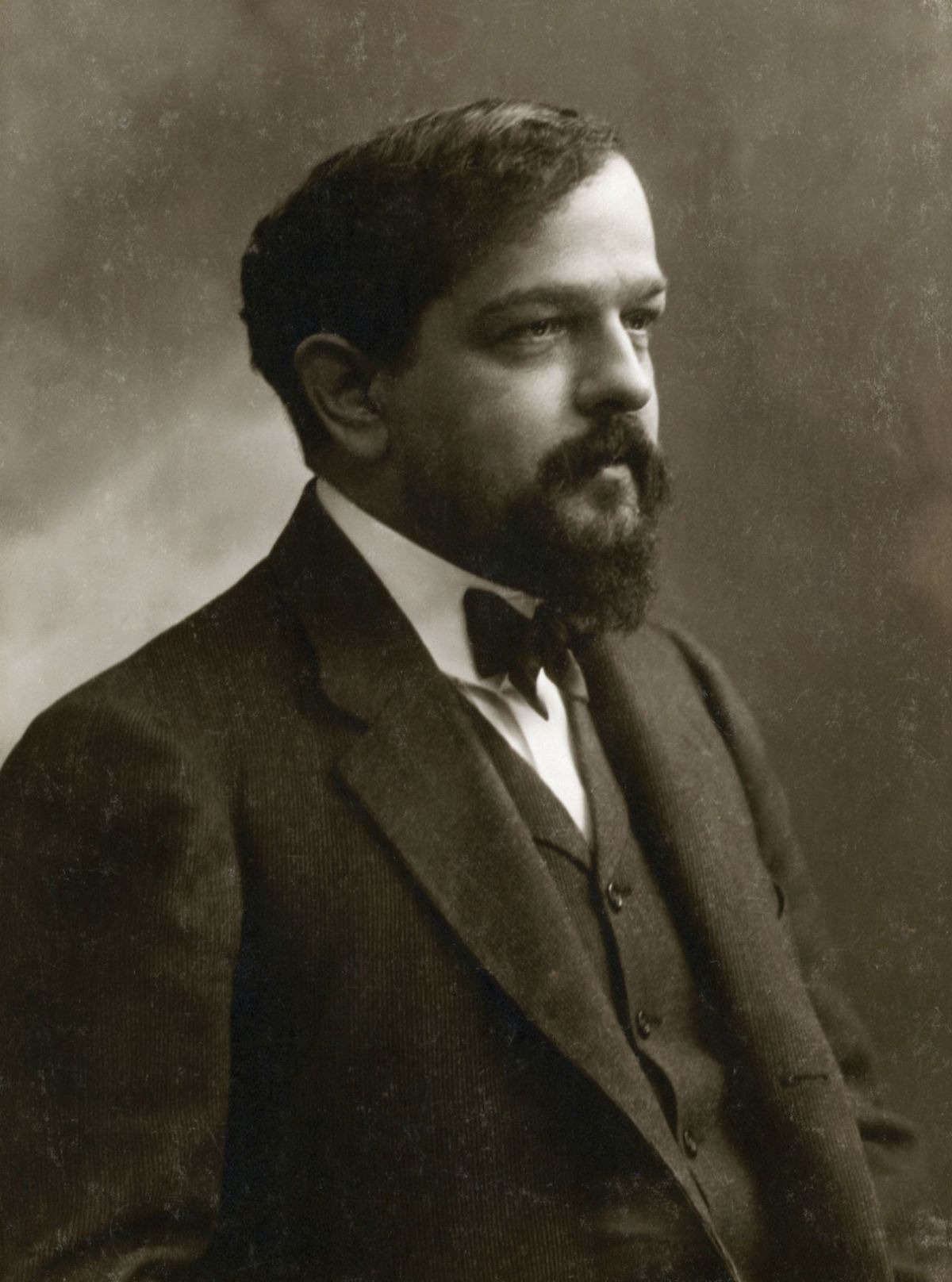
Photograph of Claude Debussy (Photo credit: Wikipedia)
Claude-Achille Debussy was born in Saint-Germain-en-Laye, France, in 1862 to a family who was non-musical but supportive of their son's burgeoning talents. He began taking piano lessons at the age of 7, and enrolled in the Paris Conservatoire at 10. As a student, he was that kid - instead of just sitting back, learning the fundamentals of harmony The Way They Were Always Taught and then futzing with them later, he insisted on adding odd harmonies and dissonances into his exercises. Even so, he did manage to win the Prix de Rome (for those who have forgotten, a competition for young composers in which the first prize was a musical education in Rome) in 1884, and studied there for three years.
In 1888, Debussy traveled to Bayreuth in what appeared to be a rite of passage for young composers by this time, and was floored by what he saw there. Though his music never featured the extreme emotional highs and lows of Wagner, he was still influenced by his unusual harmonic progressions (though in a particularly sassy moment, he did turn the beginning of Wagner's Tristan und Isolde into a big ol' joke - to great effect, no less, even including a bout of the giggles played by the piano accompaniment immediately after the quote). Around this time, he met and became friends with Erik Satie, another French composer who shared Debussy's somewhat iconoclastic musical tastes. He had several tumultuous love affairs, but as a personality, was never particularly well-known during his own lifetime (though he was able to afford a rather comfortable lifestyle). In what he saw as a rather grave insult, he was given the adjective "impressionist" as a way to describe his music; however, the similarities between his music and impressionist art can't be denied (for one, his lack of orthodox harmony leads to a sort of blurred-around-the-edges quality to his music). His music ended up being incredibly important in the grand scheme of music history exactly because of that lack of orthodox harmony - he ran with what Wagner did in terms of breaking away from classical harmonic theory and introducing things like the whole-tone and pentatonic scales, as well as bringing back the medieval modes.
Very quickly: the major and minor scales (the ones used in most music heard on a daily basis) are comprised of a pattern of whole and semitones. For instance, in C major, because there is a note in between C and D (C sharp or D flat, depending on whether your glass is half full or empty), the interval between C and D is a whole tone. There is nothing in between E and F, so that is considered a semitone. For the record, the difference between a minor scale (a natural minor scale, anyway) and a major scale is simply the placement of the semitones - in major scales, the first semitone is between the third and fourth notes and the second is between the seventh and first notes, and in minor scales, the first semitone is between the second and third notes and the second is between the fifth and sixth notes. It's this combination of whole and semitones that makes those lovely major and minor chords that almost every pop song ever uses (with the notable and distinct exception of "Single Ladies" by Beyonce, but that's an entirely different story...). The whole-tone scale, true to its name, has no semitones, and if it started on C, the rest of the scale would follow as D-E-F#-G#-A# (or Bb)-C. It has no tonal center, so to speak, and so is often used in dream sequences in movies as well as underwater scenes.
The set of medieval modes is yet another way of creating harmony. Instead of 'major' and 'minor,' there are seven modes (each named after an ethnic group that lived around ancient Greece). The names of the modes are the same now as they were then, but they have been shuffled around a bit so that the Dorian of today was not the Dorian of 300 B.C. The easiest way of visualizing the modes is to - once again - take our trusty C major scale. Conveniently enough, the C major scale is also the first mode, called Ionian. To get the other modes, all you need to do is take the C major scale - C-D-E-F-G-A-B-C - and start it on a different note in that scale. The next mode, Dorian, starts on D (unfortunately, that is the only one whose name matches its starting note), and is then D-E-F-G-A-B-C-D, and it goes on for every note in the scale. For the record, the names of the modes are Ionian, Dorian, Phrygian, Lydian, Mixolydian (a favorite of folk singers and the 1960s in general), Aeolian, and Locrian - in that order.
Hah. "Very quickly," indeed. Hey - it's not my fault that Debussy was into all this weird musical stuff.
"Clair de Lune" itself is, like most pieces featured on this blog, part of a larger work - in this case, the Suite Bergamasque, a piano suite written in 1890 but revised and not published until 1905. A suite of music, for our purposes, is simply a collection of pieces that can each be performed alone but has some sort of unifying theme. In the case of the Suite Bergamasque, each piece is a musical illustration of a poem by Paul Verlaine - sort of like a symphonic poem minus the orchestra. "Clair de Lune" means "moon shine" (without the alcoholic connotation, of course), and the piece does really sound like a moonlit night. Much like our man Liszt's Hungarian Rhapsody, the piece is most well-known in its orchestrated form - having that dripping harmony played by strings oozing with pathos is much more conducive to big cinematic scenes at the Bellagio, of course - one orchestrator being Leopold Stokowski (among other things, he was the conductor in Fantasia).
So there you have it - a piece that represents quite a lot in the theory world. I hope I didn't get too pedantic with the theory; I know that's really not the most interesting thing in the world to read. But hey, the school year's starting again, and perhaps someone will Google "just how the hell do modes make sense?" and this entry will help them out. Debussy might even be a little proud of that, but then again, he was always a little bizarre.
Classical Gas is one of the most requested and most familiar instrumental pieces of all time. In an episode of The Simpsons called "Last Exit to Springfield" Homer leads the workers of the nuclear power plant in a strike to recover their lost dental plan. While they picket the plant, Lisa plays a bleak worker's song. As she finishes, Lenny shouts, "Play Classical Gas". Lisa plays the guitar and everybody watching the episode on TV goes, "Oh, yeah, THAT tune!" Classical Gas is always asked for whenever a bunch of people and a nylon string acoustic guitar are in the same room. It is not really a great technical showcase for finger style guitarists but it is a great vehicle to show off the sound of the classical guitar.
Classical Gas was released into the world in 1968. A song by The Doors prevented it from turning into a number one hit but it remained in the second place for two weeks. Forty years later it is still among the most familiar tunes of all time and, along with The Anonymous Romance and Leucona's Malaguena regarded as an essential element of the classical guitar repertoire. And nobody can say why.
The impact of Classical Gas is way more than the sum of its parts. There are very few musical ideas in the tune. It is mainly repetition of a theme made up of a few notes. There are a few parts that are unforgettable "surprises" making use of syncopation, scales, strums, and abrupt time signature changes. Somehow all the bits link together like pearls on a necklace, and the final note adds a sublime resolution.
The composer, Mason Williams, states on his website, "I didn't really have any big plans for it, other than maybe to have a piece to play at parties when they passed the guitar around. I envisioned it as simply repertoire or "fuel" for the classical guitar, so I called it Classical Gasoline." Mason Williams' day job was as a comedy writer and stand-up comedian who had lots of other projects besides writing a classical guitar instrumental.
It was Mason Williams' work on the Smothers Brothers' "Comedy Hour" which gave him the opportunity to have his pet composition heard by the American public. The original score of the piece shows only chords and a few notes. Mason Williams had a twenty-three year old composer named Mike Post finish off the arrangement.
At the Grammys it won Best Instrumental Composition and Best Instrumental Performance for Mason Williams and Best Instrumental Arrangement for Mike Post who has had a career full of triumphs in the field of TV theme music. His latest victory is the theme(s) for the "Law And Order" series.
Classical Gas has been employed as the theme music for several news programs, the background music for the Apollo 4 movie, and featured in a number of other movies and TV shows. Many people have mistakenly attributed Mason Williams' solo version of the tune for a cover by Eric Clapton.
Classical Gas is quite an easy piece to play, the challenge is to play it with passion and dynamics because it appears to non-guitarists, more difficult to play than it really is. Maybe this is the reason it is among the most requested guitar pieces ever.
A concerto is different from a concerto grosso in that it is written for one soloist, rather than a group of soloists, and orchestra.
One of Handel’s most popular concertos for organ and orchestra is known as “The Cuckoo and the Nightingale”, because the second movement imitates the sounds of these birds.
This work provides a good example of how Handel used previously composed music in his compositions. It contains material from his Concerto Grosso Op. 6, No.9, and from his Trio Sonatas N . 5 and 6. Concerto Grosso in B flat major, Op.3, No.2
A concerto grosso is a musical composition written for a group of soloists (concertino) and orchestra (ripieno). The concertino and the ripieno sometimes play in unison, but more often they play in contrast with each other.
In or about 1720, Handel produced a series of six concertos for string instruments. One of them was the Concerto Grosso in B flat major,
Op.3, No.2. In this piece, the concertino is made up of two oboes and one bassoon, which introduce the melody or theme. Throughout the piece, this melody is passed on to other instruments and transformed into different variations.
While Handel did not invent this style of music, he developed it to a new level of sophistication.
Bb- and A-Clarinet, German System (Photo credit: Wikipedia)
The clarinet family are some of the most expressive instruments in any orchestra, woodwind ensemble, or jazz band. They have a very distinguishable sound spanning all of the ranges: low, medium, and high. We are so attracted to the sound of clarinets because they sound so much like us. The "licorice stick", as it was once called, can express a full range of emotions from serious, happy, sensuous, exhilarating, sexy, dark, loving, dreamy, or melancholy.
The Beginning of the Clarinet Family
Clarinets were not invented, per se, but originally existed as folk shawms. Shawms can be dated back to the 1400 and 1500's and were known in France as "bombardes" or "chalameux" and in Germany as "pommern". They were slightly conical, had a narrow bore, 6 fingerholes, an open key inside a protective cylinder for the small finger, and a double reed like the oboe. In the late 1600's the renowned woodwind maker Johann Christian Denner of Nuremberg turned the chalameux into the clarinet when he made them into the shape of an oboe.
Clarinets were the first reed instruments to have a cylindrical versus a conical bore and were made of boxwood. Wooden tubes were cut into several joints with a separate bell. Early clarinets were played with the reed tied to the mouthpiece with twine and against the player's top lip, which often produced a shrill sound. It wasn't until 1831 in Paris that the reed was switched to the lower lip providing for a more pleasant tone.
The first clarinets in the clarinet family had a key above the front holes to produce a' and another key on the opposite side for b' and were pitched in C. In 1720 Denner's son modified the clarinets by moving the b' hole towards the top. With the vent hole at the upper end of the cylinder, the scale of fundamentals could sound a 12th higher. The hole was covered by a speaker key. When the third key was added, the range was extended down a semitone to make it possible to play the missing b. During this time it was difficult to play in different keys, so the body of clarinets were divided into 3 sections so the player could use interchangeable joints of different lengths.
In 1750 the fourth (Ab, Eb) and fifth (F#, C#) keys were added and clarinets were no longer just solo instruments, but were now accepted into the orchestra. Further refinements came in 1790 when the sixth (C#, G#) key was added and the pear-shaped barrel disappeared. Although, the mechanics improved with the addition of keys, there continued to be ongoing difficulties with fingering, correct embouchere, and intonation, so different clarinets were made for playing sharp keys and flat keys. Finally in 1809 Iwan Muller developed the prototype of what became the modern Bb clarinet with 13 keys. In 1817 this model was improved upon by using pads over the countersunk tone holes and the metal ligature was invented. In the mid 1800's the final major modification was made by Hyacinthe Eleanore Klose' who used ring keys like those that Boehm had used for flutes in order to make the fingering system more simple.
Bass Clarinets
The first bass clarinets in the clarinet family were developed in 1772 by Giles Lot in Paris. They were called basse-tubes. They are in the keys of Bb, C, and A, have an Eb key, and are an octave below the clarinet with the ability to span 3-1/2 octaves. Between 1772 and 1836 different musicians in various countries constructed bass clarinets, including Adolphe Sax in 1836. The bass clarinet is similar in appearance to the saxophone in that it has a curved bell and the mouthpiece is attached to a curved neck. Their tone is full and deep and are more popular in free jazz or avant garde versus jazz.
Alto Clarinet
Within the clarinet family the alto clarinet in the key of G existed in 1792 and was later changed to the key of F and Eb. It never acquired a role in the orchestra, but was used as a tenor clarinet in British military bands since the saxophone was not in existence yet. Its best quality was its ability to project sound extremely well.
Contrabass Clarinets
Another member of the clarinet family was the Bb contrabass clarinets which were in existence since the 1800's. They are an octave below the bass clarinet, have a rich tone, and are easily blown. Leblanc of France made a collapsible model with a mechanism which straddled the double tube. It was used in the London Symphony Orchestra.
Double Bass Clarinets
Playing at two octaves beneath the clarinet, double bass clarinets have a tone that is solid and full. Beginning in 1808, different versions were developed, but it was not until 1890 that finally an excellent one was made by Fontaine-Besson of Paris. The downside of this music instrument is that it was very expensive, so it was not used much.
Cousins To The Clarinet Family
Basset Horns
Basset horns were first made in 1770. They were made out of wood which was split lengthwise, then the two halves were hollowed out, and then glued together to form a crescent shape. This was then covered with leather. In 1800 the horn shape was changed to being sharply bent to an almost right angle. It underwent another shape alteration a few years later when Heinrich Gresner in Dresden tried to give it a straight form as it is today. Basset horns are basically an alto clarinet, but with a narrower bore, thinner walls, and four semitones below the low e.
Contrabasset Horns
Contrabasset horns were first developed in the beginning of the 1800's by Georg Streitwolf in Gottingen. They are in the key of F and one octave below the basset horn. From the 1880's into the 1900's some musicians tried to revise them, but they were not used much and are rare.
Even though the clarinet has been quite popular, especially during the early jazz years, not everyone knows that it has taken quite a long time for the clarinet family to evolve since its early beginnings as a shawm in the 1400's. It has many family members that are unique in their own way, yet very similar to the clarinet, just like any human family members. The sound of clarinets has also developed from a shrill, unpleasant sound to a tone that that is pleasant and captures a full range of emotions of the human spirit.
No other work has contributed to the fame of Joseph Haydn (1732-1809) like his oratorio "The Creation", however, no other expresses the inner wealth of the composer, the greatness of his art, in such an outright manner. To establish Haydn's immortality his symphonies and quartets would have already been enough, however, without "The Creation" we would not able to estimate the whole scope of his talent, because this composition does not only exceed his usual range of instrumental music, but it led the composer to entirely new ways of the musical development of thought and structure.
Haydn was one of the first composers to write a pitch change as well as a written out solo for the timpani in a symphonic movement. (Photo credit: Wikipedia)
The poetic voyage in "The Creation" from pole to pole of the visible and invisible world makes it an especially complex oratorio, Haydn has solved the challenging demands he had to face with incomparable confidence and added unexpected and peculiar characteristics to the poetic representation, in which also humour has its place. In Haydn's interpretation the psychic and mysterious character of the act of creation steps back behind the joyous gratitude to the creator. The music unfolds an unsurpassable inventiveness.
The composition is especially admired for its form. Only a composer like Haydn could join the immense plenitude of the subjects and scenes so clearly arranged, comprehensively and, nevertheless, impressively. The artistic freedom and beauty of "The Creation", which have inspired many artists since its first performance, will be continually considered exemplary for music.
As can be proven by his early oratorio "Il ritorno di Tobia", Haydn was mainly influenced by the Italian school, he had already encountered Händel's new art in Vienna, "The Creation" owes, but in London it had effected him with all its splendour. During his second stay, Haydn received the text for "The Creation", which a poet, unknown in the history of literature called Lidley (more recent research claims it was written anonymously) allegedly had written for Händel, who had probably rejected the text because of its length, however, it was composed in the three act order typical to Händel's oratorios. Not until his return to Vienna did Haydn decide on the composition, at the instigation of the well-known Händel-admirer Baron van Swieten, who amateurishly translated the English original himself. The composition took the three years from 1795-98, a strenuous endeavour of which he complained over and over again, both orally and in writing.
The success of the, at first, privately performed oratorio - on the 29th and 30th April at the Schwartzenberg palace, then on the 19th January and 19th March at the Viennese Burgtheater - was unequalled. "The Creation" brought to the composer constant honour, within and outside Germany it was performed over and over again and highly celebrated. Church music took over single choir parts, German "Kurrenden" (boys choirs) sang them until well over the middle of the 19-th century. Another remarkable effect is also of special interest: "The Creation" inspired the founding of many choir clubs and music institutes, among them the "Allgemeine Schweizer Musikgesellschaft". Haydn's composition entailed an increase in the performance of the oratorios by Händel, an independent German oratorio school evolved, which could finally overcome the rule of the Italian style.
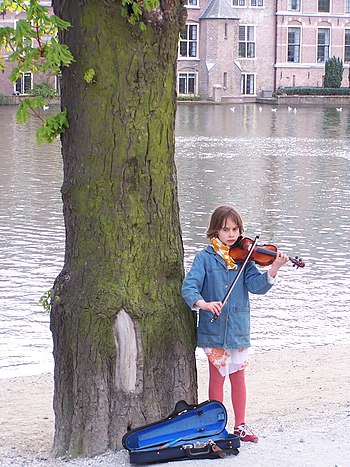
A girl playing violin in The Hague (Photo credit: Wikipedia)
For violin intonation exercises, there are really thousands of possibilities for exercises and etudes you could practice that will improve your intonation. Practicing anything itself properly and with good intonation is bound to cause an improvement on some level even if the exercise or piece of music isn't specifically geared towards that goal. If you need to improve your violin intonation, here are some good exercises to get you started on the right track.
The first and most important violin intonation exercise is the scale. 90 percent of the music played on any instrument is based on scales. They are everywhere and are the most important and most basic building block of playing the violin. Do not under any circumstances underestimate this! Keep your scales cleanly polished with hours in the practice room and do not allow yourself to slump this off. It will cost you a lot of good violin intonation in the end.
Next, try a sing and play exercise. Take a scale or a simple piece you are practicing and practice it slowly while humming it alongside your instrument. This simple intonation exercise will force you to mentally and physically recognize the sound produced on each note. If you are playing too high, simply drop down on octave and keep humming. This will be very annoying at first, but will definitely help your mind to understand and interact with the violin intonation you are playing and thus improve your results dramatically.
Another great exercise is the arpeggio. If 90 percent of music is built on scales, a remaining 9 percent is built on arpeggios, which means that between these two, you have the vast majority of violin intonation covered. Arpeggios can be complex to master, so when you first start, play a single octave at a time and don't allow yourself to make any mistakes. This may mean slowing down and working carefully through each arpeggio, spelling out each note clearly and with good violin intonation, but if that's what it takes to play properly, then keep at it!
Regardless of what exercises you do, nothing is as important as getting yourself a fine teacher to learn from. A talented and experienced teacher can mean the difference between success and failure when it comes to playing the violin. Don't ever forget the importance of this. To make true dramatic improvements in your intonation, get yourself a good teacher.
Have you ever wonder why this little music machine attracts so many people in the entertainment world? Have you ever tried singing a good song using a karaoke?
Today, the utilization of karaoke is rapidly gaining a fair share in the market. In most entertainment places like bars, merry-making will not be complete without these remarkable music machine known as the karaoke.
A trio of karaoke machines. (Photo credit: Wikipedia)
However, many people are wondering what this karaoke is all about. How come that this new technology had quickly gained the people’s attention in a short span of time.
Moreover, there are many people wondering why, is spite of the close interaction between and among karaoke users, still, they do not know what karaoke is all about.
So for those who wish to know everything about karaoke, here is a list of some facts that will help those who want to land a big score in this remarkable music box.
1. When name matters
It is obvious that the word “karaoke” is a foreign name.
In reality, karaoke is actually a Japanese term, which means “empty orchestra,” where “kara” in Japan means empty, while “oke,” from the Japanese term okesutora, which means orchestra.
No wonder why using karaoke literally creates a small orchestra where the performer and his audience are having a grand time.
2. The origin
Karaoke first originated in Japan during the 1970s, where people are known to be “entertainment aficionados.” At a later stage, this wonderful music boom box was distributed to the East Asia during the last part of the 1980s and entered the United States on early part of the 1990s. From here, karaoke gradually dominated the whole world.
3. The technology
The basic technological concept of karaoke machine is based on the utilization of “audio input” and “audio output.”
This technology uses the concept of “subcode,” which, in turn, makes the encoding of the lyrics absolutely possible.
With this device, seeing the lyrics on the screen was made possible.
On the other hand, the technology that is being used by the karaoke machines has the capacity to modify or alternate the “pitch of music” so that the singers will be able to establish a good connection with any available source of music. This can be done by preferring a particular key based on their “vocal range.”
4. The authentic look
What the modern people may not realize is the fact that the first forms of karaoke resemble to that of a cassette player. This is because karaoke in the past uses compact discs or CDs. The only difference this karaoke CDs make with the other CDs is that it combines standard graphics capability known as the CD+G.
5. Utilization of newer technology
With the fast pace of technology, one item seem to evolve with another item that is more technically superb than its first form.
Take for example the emerging new technology of karaoke. With the help of the new technology, karaoke fanatics may no longer stay in clubs and bars just to get hold of the microphone and sing. This is because karaoke is already available over the cellular phones, Internet, and computers.
All of these three use special software that when attached to the machine, the audience will be able to make the best performance.
Indeed, karaoke are known for its entertainment purpose. So one should keep in mind that the only best way to enjoy karaoke is to be entertained to the fullest.
As a trumpet / cornet player continues to grow in their playing abilities, we all reach frustrating times with various skills that we either can't seem to master, or can't seem to get a grasp on quickly. To master trumpet/cornet playing, a student must have patience and tenacity! Both are required to help trumpet students through the frustrating times.
Most answers are simple than what our minds will let us accept. There have been many times that I've practiced something and it seems to fly out of the trumpet. Usually what goes through my mind is "it can't be that easy, I've been struggling so long with this!"
The quick answer is - yes, it can be that easy. Most people let the simple solutions escape them because of built up notions of complexity. Something that isn't performed easily within the first few tries, becomes more and more frustrating to the cornet/trumpet player. From double tonguing, high notes, better tone, playing pianissimo, controlling rhythm, performing difficult passages in a piece of music, learning scales, etc. These can all present challenges to each individual trumpeter or cornetist.
Working on major scales for younger students can be not only boring, but a daunting task because they are looked at as difficult in many ways. The F sharp major scale is one that has most notes sharp (or raised half step). What most students don't think about is that there are only 7 notes in each major scale. The F sharp scale has 6 sharps, so why not focus on the one natural? By practicing slowly and taking each note one by one, within a few practice sessions, this scale becomes easier. Within a week, the scale can be memorized. Within a month, it will play as easily for the trumpet student as the C major scale with no sharps or flats. Again - tenacity and patience!
Ah, I remember the good old days when I had my first banjo lesson. Actually, it wasn’t exactly my first lesson. I had been using the internet to improve my “skill” for a while, and I was slightly conceited since I thought I had some idea about what I was doing. I watched videos of a real expert playing the banjo while the tabs were available as well. I learned a few songs and techniques that sounded interesting, but that was about the extent of my knowledge.
Brooklyn Museum - The Banjo Lesson - Mary Cassatt (Photo credit: Wikipedia)
When I had my first real lesson, it broke down all those illusions I had of being a decent player. I tried to show off, but as soon as his deep eyes met mine I missed a chord. It was my first time to ever play any instrument in front of anyone, and I didn’t think I would get nervous. After all, I’ve always been a gifted public speaker. The only one in the room was my teacher, and I was having a terrible time.
I’m having a hard time seeing my future in banjo playing, especially since I can’t even whack up the ginger to play something in front of my own teacher. He’s a nice guy, and he can play the banjo like no other. He’s already taught me several exercise I can use for my next lesson. It’s also a great experience just to watch him play, since his skill far outweighs mine. I just hope I will sound at least slightly more decent the next time I have a lesson.
But if I always freeze up when I try to play at my lessons, I’m worried that my instructor will never be able to give me the help I truly need. It’s impossible to get feedback and constructive criticism if everything I play is absolute garbage. I think I will start recording my lone practice and playing it back for him. Hopefully I won’t freeze up just knowing that he will be listening to it soon…